Neurodiverse Office Design: The Future of Inclusive Workspaces in 2027

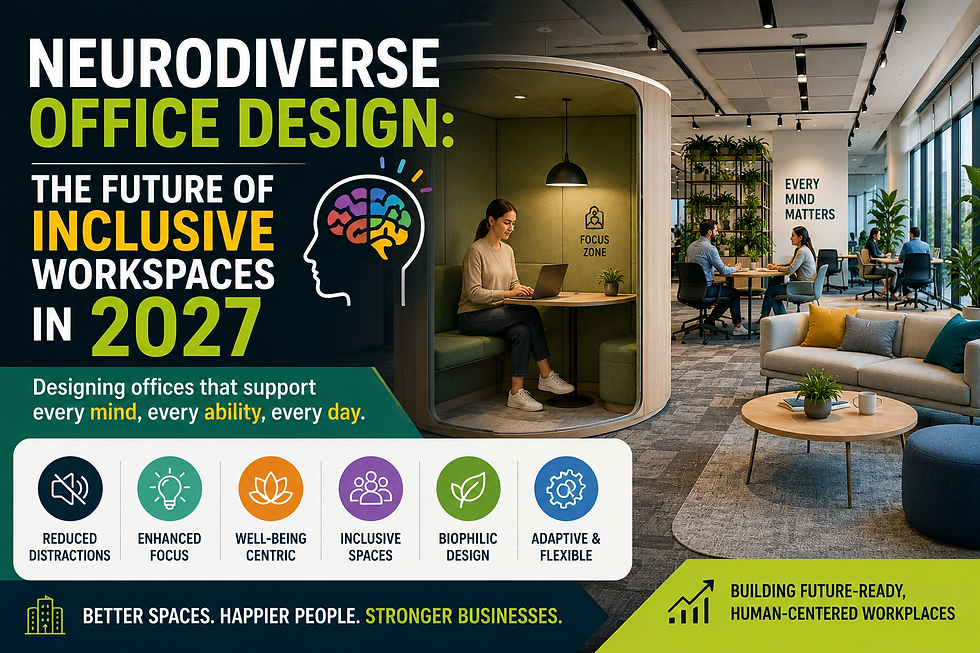
The future of office design isn't just about aesthetics or technology—it's about creating spaces where every employee can thrive. One of the fastest-growing trends in commercial interior design is neurodiverse office design, an approach that supports people with different ways of thinking, learning, and processing information.
As organizations focus on diversity, equity, and inclusion (DEI), workplaces are evolving beyond traditional layouts. Modern offices are now designed to improve comfort, reduce stress, and enhance productivity for everyone.
What Is Neurodiverse Office Design?
Neurodiverse office design creates environments that accommodate employees with conditions such as ADHD, autism, dyslexia, anxiety, and sensory sensitivities. The goal is to build workspaces that reduce distractions, encourage focus, and offer flexibility without compromising collaboration.
Rather than designing for the "average" employee, businesses are embracing spaces that support a wider range of work styles and individual needs.
Why Businesses Are Investing in Inclusive Workspaces
Companies have realized that employee experience directly impacts performance. Inclusive office interiors lead to:
Higher employee engagement
Better focus and productivity
Improved creativity and innovation
Stronger talent attraction and retention
Enhanced workplace well-being
Positive employer branding
An inclusive workspace benefits every employee—not just those who identify as neurodiverse.
Key Elements of Neurodiverse Office Design
Quiet Focus Areas
Dedicated spaces for deep work help employees concentrate without interruptions. Acoustic panels, soundproof meeting pods, and private workstations reduce noise and improve focus.
Adjustable Lighting
Harsh lighting can increase stress and fatigue. Offices now incorporate natural daylight, dimmable LEDs, and indirect lighting to create a more comfortable environment.
Flexible Work Zones
Employees need different environments for different tasks. Modern workplaces include collaborative hubs, quiet libraries, informal lounges, and wellness rooms.
Biophilic Design
Indoor plants, natural materials, calming colors, and access to daylight reduce stress while improving cognitive performance and overall well-being.
Clear Wayfinding
Simple layouts, intuitive signage, and organized circulation make navigation easier while reducing mental fatigue.
Technology That Supports Inclusion
Smart office technology enhances accessibility through:
AI-powered room booking
Personalized lighting controls
Occupancy sensors
Noise-monitoring systems
Digital wayfinding
Smart climate control
These features create personalized work environments that adapt to employee preferences.
Why This Trend Will Define Future Offices
Today's workforce expects employers to prioritize well-being and inclusion. Neurodiverse office design helps businesses build healthier, more productive workplaces while demonstrating a genuine commitment to employee success.
Organizations that invest in inclusive commercial interiors are better equipped to attract top talent, improve collaboration, and future-proof their workplaces.
Conclusion
The next generation of office design is human-centered. By embracing neurodiverse workplace strategies, businesses create environments where every employee feels comfortable, valued, and empowered to perform at their best.
At Officiya, we design intelligent, inclusive, and future-ready commercial interiors that combine functionality, innovation, and employee well-being to help businesses succeed in the evolving workplace.
Comments